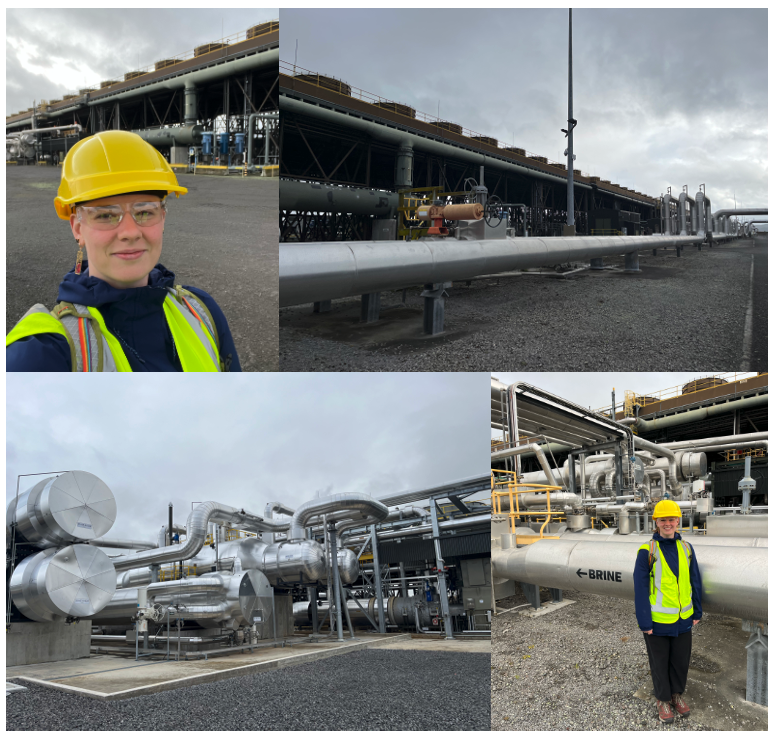
Upflow and the GeoSHOT project are hosting post-doctoral researcher Dr. Laura Blackstone on a two-month internship. She is numerically modelling possible regimes of how fluid and heat might be transported in the region that the superhot geothermal project is targeting for drilling. Below, Laura shares a few things about herself and her research.
I grew up in northern Maine, USA. I attended Brown University for my undergrad, where I majored in Mathematics and Computer Science (Bachelor of Science) and Geology-Physics/Mathematics (Bachelor of Arts). I had a wide range of academic interests and refused to specialize my course of study within a single department! Eventually, this led me to specialize in the very interdisciplinary field of computational geophysical modelling.
In 2018, I studied abroad at the University of Canterbury in Christchurch, where I had the privilege to learn from New Zealand’s wide range of world class geological field sites.
I have just completed my PhD in Geophysics at Stanford University, with the thesis title: How magma moves? Physics-based models with applications to lava fountains, dikes, and magma mushes. In plain language, I researched how magma moves around within the Earth in different ways. This included modelling magma flowing through a pipe-shaped conduit, hydraulically fracturing through a host rock, and percolating through an interconnected, poro-elastic matrix.
My current work for GeoSHOT on geothermal systems is not so different. I still use physics-based modelling to think about the same physical processes, but now the fluid is water instead of magma.
I am modelling possible regimes of how fluid and heat might be transported in the region that the GeoShot/Superhot project is targeting. My work uses physics-based modelling to reduce and/or quantify uncertainty for situations the deep drilling project may encounter at depth. The results of my modelling at the deep reservoir scale will compliment larger scale model that spans from the deep magmatic heat source all the way to the surface, being developed by John Burnell at Earth Science New Zealand. Specifically, I am using the Finite Element Method (FEM) modelling software COMSOL Multi-physics to perform the technical work.
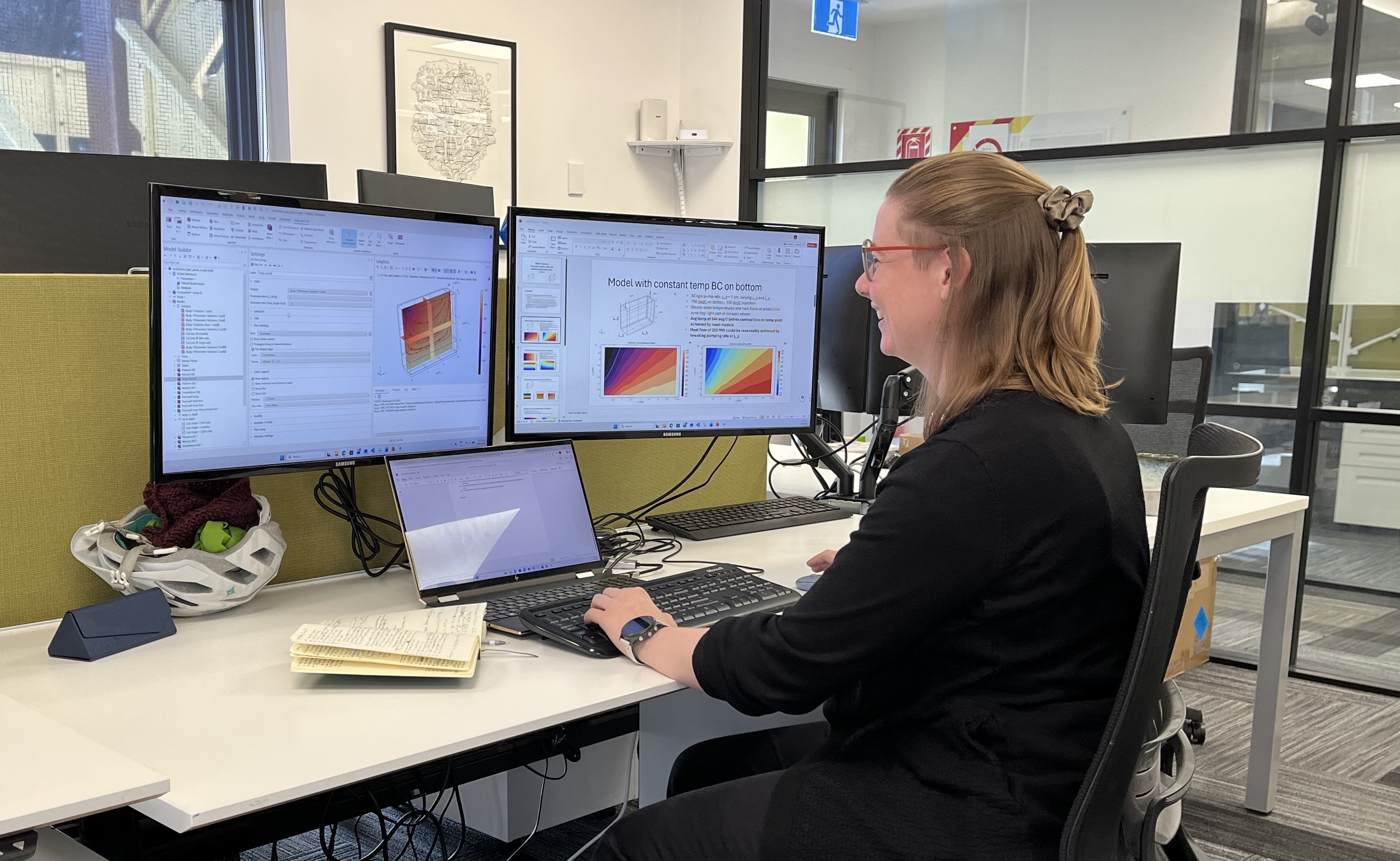
When I saw a job posting for geothermal modelling in a volcanic setting in New Zealand, I submitted my application within six hours of the post getting published. I don’t think I could imagine a better post-graduation internship for myself. This internship is aligned with my existing skillset, and it offers the opportunity to work on new types of problems and grow professionally, in an incredible location!
During daylight hours you can find me exploring the trails around Rotorua or checking out a café in town. During night-time hours, you can find me working on a knitting project.
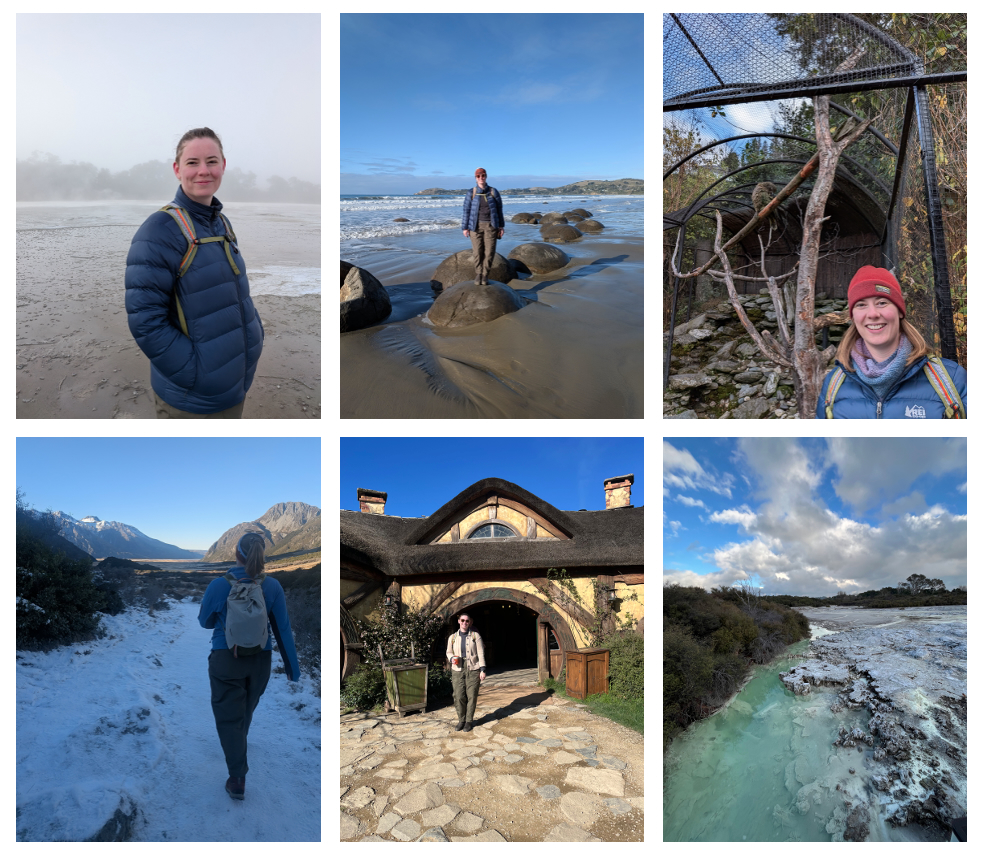
Before I started this internship I took two weeks to travel around the North and South Islands and experience many of the touristy things that I either missed or wanted to re-visit from when I was here previously.
Highlights so far include seeing:
Things I am looking forward to during my remaining time include: